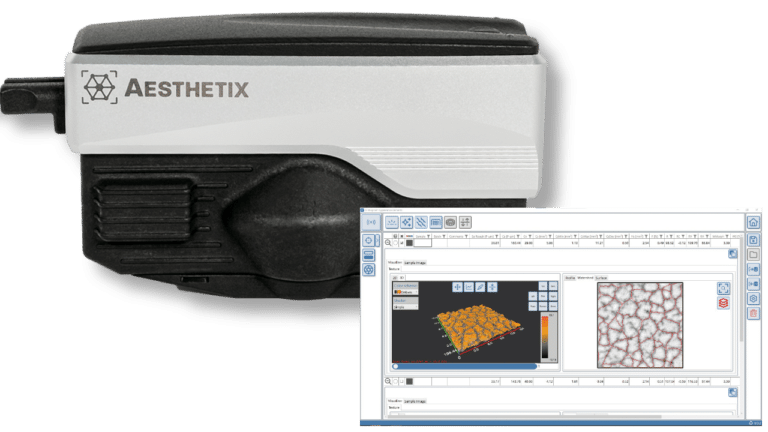
Discover the next generation of surface quality control at American Coatings Show 2026, May 5–7. Visit us at Booth 2274 to explore smarter ways to control surface appearance. Plan your visit.

Orange Peel & DOI FAQs

How is orange peel measured?

Orange peel has typically been measured using a set of standardised test panels with varying degrees of orange peel as a visual comparison.
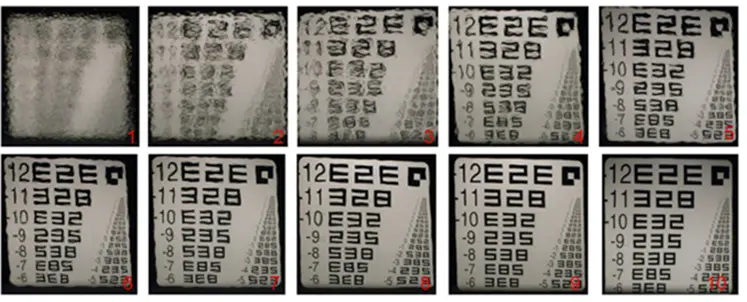
doi panels

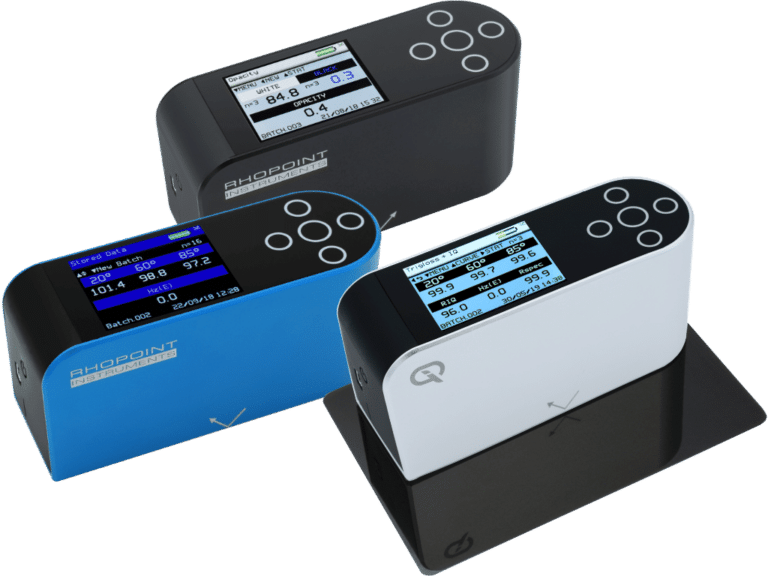
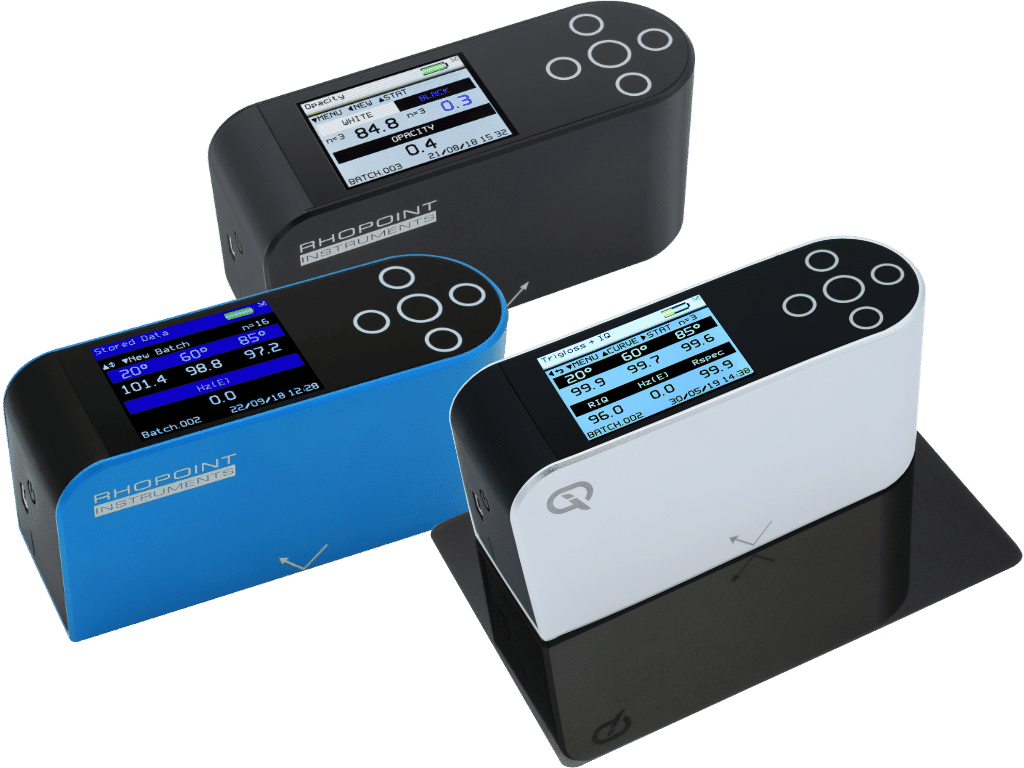
This method, not only being time consuming and highly subjective is also not in any way accurate as there is no real data available to identify potential problem areas in the process. Instrumental methods of providing quantitative information have evolved enabling a greater understanding of Orange Peel and its causes resulting in the creation of a new metric, DOI (Distinctness Of Image) able to express the degree of orange peel present numerically. By measuring the clarity of reflected images the smoothness of a surface can be determined. The higher the degree of orange peel present, the less defined the reflections. The Rhopoint IQ measures the DOI of a surface by quantifying the way a reflected measurement beam is spread and distorted around the specular angle.
How is DOI (Distinctness of Image) measured?

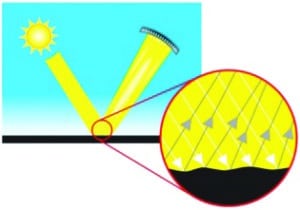
DOI can be measured using a similar principle to gloss measurement by projecting light onto a surface at a particular angle. As orange peel is more noticeable on highly reflective surfaces a smaller measurement angle at 20° is preferred. The reflected light is collected at an angle equal but opposite to the normal specular angle using a wider angular band of measurement. This enables the amount of light deflected away from the specular angle to be determined.

Diagram showing DOI

The Rhopoint IQ is designed using the 20°/60°/85° geometry of a standard gloss meter but incorporates 512 element, linear, photo-diode array (LDA) at the 20° angle instead of a single detector enabling measurement of the distribution of reflected light. The spacing of the pixels of the LDA is such that it measures at the 20° ± 7.25° in steps of 0.02832°. The orientation of the source slit/aperture is set perpendicular to the plane of the incident and reflected beams to comply with the standard ISO 2813 – Determination of specular gloss, while the LDA is set in the plane of reflection.

The light source used in the instrument is a high power white LED filtered to correspond closely to the required spectral response, i.e. the photopic response function V(λ). The instrument calculates gloss values using the response from elements of the LDA which correspond to the angular tolerances in ISO 2813.

Related products

FAQ Category: Orange Peel & DOI

Rhopoint Americas
Privacy Overview

This website uses cookies so that we can provide you with the best user experience possible. Cookie information is stored in your browser and performs functions such as recognising you when you return to our website and helping our team to understand which sections of the website you find most interesting and useful.